


A 233.6-acre buffer zone surrounding the proposed construction site of a future home for the owner of Cielo Vista Ranch has been the subject of a land use hearing this week in San Luis.
During three days of testimony in Costilla County Court, Special Master David Tenner heard from the locals who represent the land use access holders and from ranch attorneys on whether approving the buffer zone takes away from the reasonable access granted to the historic land users.
Tenner is expected to deliver his order in a few weeks’ time, deciding whether or not he’ll allow a sizable buffer zone around where William Harrison wants to build a home on the 88,000-acre Cielo Vista Ranch.
Harrison, who wasn’t present during the hearing, is arguing that he needs the buffer zone for privacy around his home and to protect the population of Rocky Mountain Bighorn Sheep on the ranch from interacting with domestic sheep and transmitting illnesses.
The hearing is the latest in one of the longest-standing pieces of ongoing litigation in American history. The fight over La Sierra extends back to 1981 and because of the fraught nature of the ranch’s ownership and historic access granted to over 5,000 people it finds itself back in a courtroom on a regular basis.
A special master was assigned to the case in 2022 to help mediate disagreements between the ranch and the people who have historic access to use the land, known as La Sierra.
For three days at the packed San Luis courthouse, residents watched as attorneys and witnesses made their cases.
Posters and a banner in San Luis called for residents to “Pack the Courthouse.”
The arguments weren’t about letting Harrison build a home on the land; there was little dispute about that. Jamie Dickinson, attorney for Harrison, noted that it has been “dehumanizing” for Harrison and that he has been “constantly criticized” for not living in the community. Harrison wants to make his home in Costilla County and the San Luis Valley, Dickinson said.
The argument was about the proposed buffer zone and what kind of access it would limit for the people who use the land.
Carlos DeLeon, ranch manager, testified that Harrison chose the spot for its views and that it was mostly barren in that area, which was difficult to access prior to 2021 when a road was constructed.
It’s also an area that allows access to prime grazing areas such as nearby Perdido Canyon. The upper “homesite” was in an area described as shaped like an hour glass, and that construction of the home complex would be in the narrowest part of that hour glass. DeLeon said it was a unique area on the ranch.
The land use access holders, the heirs of the Sangre De Cristo Land Grant, and their attorneys argued against the buffer zone, saying it will create unreasonable restrictions on accessing grazing areas. They argued that because the area is in a chokepoint that its construction location was “intentional.”
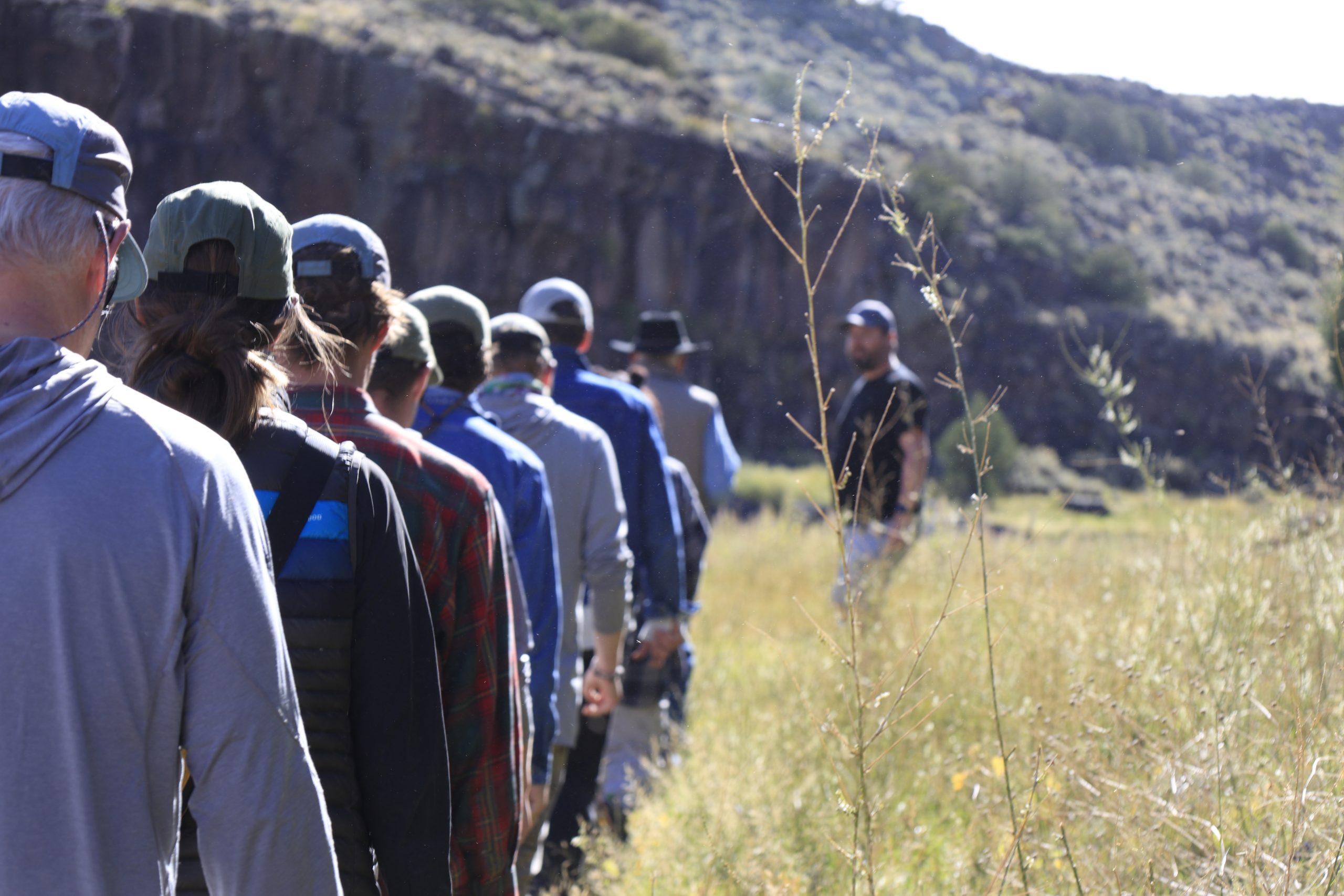
A group of access holders went on a site visit in 2025, where they were able to document the geography and landscape as a whole.
The ranch, in turn, argued that the buffer zone is for privacy and protection and that restricting access was reasonable.
Dickinson later argued that there is no evidence suggesting Harrison intends to restrict access by building in the area. DeLeon testified it was his opinion there were other ways to access the area above the homesite.
Even though the buffer zone is marked for 233.6-acres, the attorneys for the land grant heirs and the heirs themselves said that it cuts off access to more than 3,000 acres of prime livestock grazing territory.
The buffer zone surrounding the proposed homesite, which includes seven buildings and a “toy box” where Harrison intends to store his helicopter, snow mobile, and ATVs, has a security area larger than the White House and the Vatican. Their combined acreage is 139 acres.
“Mr. Harrison wants more privacy than the pope and the president of the United States combined,” Madeline Finlayson, an attorney for the land grant heirs, said in her closing argument Thursday.
DeLeon testified that since Harrison purchased the property in 2017, he averages 1 to 2 visits per year. Some years he’s here more often, DeLeon said.
DeLeon said that Harrison does have privacy concerns. A bullet hole in one of the already-existing cabins was cited as one reason for the extra privacy. Harrison’s largest concern is trespassers. Trespassers are not the keyholding heirs to the land grant, and the ranch has between 30 and 50 cameras to monitor for trespassers and others using the land illegally.
Around 5,000 people were found to be heirs to the land grant and of those 5,000 a little more than 1,000 people are keyholders with access to use the area for timber and firewood collection and grazing. There are nine access gates to the ranch in various parts of Costilla County.
These gates are between miles of an 8-foot-tall fence that Harrison has been constructing, causing deeper ire among the residents and access holders. This fence is the subject of another legal case altogether. Currently, two reports are awaiting public reveal to detail whether or not the fence is wildlife friendly.
A second part of the hearing’s arguments was about the mingling of domestic sheep with Rocky Mountain Bighorn Sheep. When domestic sheep and bighorn sheep mingle or graze together, it risks the transmission of a bacteria that can cause pneumonia in the wild bighorns.
According to the ranch, there is a population of bighorn sheep that grazes naturally on the land. The ranch argued that allowing domestic sheep to graze on the ranch allows for the transmission of the disease and puts the wild population in danger.
A sheep herder testified that he hadn’t seen bighorn sheep on the ranch in many years. The attorneys argued that “not a single photograph” of bighorn sheep being present at the proposed homesite was entered as evidence by the ranch.
As the three-day hearing wrapped up, Tenner thanked both sides of the courtroom, saying “you want lawyers” who can help you make decisions.
Before the judge makes his decision and hands down an order, both sides have to deliver briefs to him in the coming weeks. Unless otherwise stipulated and a delay is requested for Tenner’s order, he will have to make the decision on whether or not it’s “reasonable” for the buffer-zone to be allowed, restricting movement through the area.
If it’s reasonable, he’ll allow it; if it is unreasonable he will either not allow it or modify it if he can. Tenner said he doesn’t want to risk “interpreting the law differently” than the Colorado Supreme Court and District Court’s previous rulings.
